
The pause gives the US time to breathe, to regroup, to move its expeditionary force into position without risk of interception along the way. It gives Iran nothing -- on the ground, attacks against its infrastructure continue apace. Prem Panicker in his must read daily blog on the Gulf War.

For weeks, the war skirted the edge of catastrophe without tipping over. Missiles flew, there was much destruction, commanders were assassinated, cities across the Gulf and even in Israel struggled to absorb the shock. But one line held: Energy infrastructure, the arteries of the global economy, remained largely untouched. That is no longer true. Prem Panicker continues his must read daily blog on the Gulf War.

Taking Kharg would give the US control over virtually all of Iran's oil exports and thus provide significant leverage, notes Prem Panicker in his must read daily blog on the Gulf War. It would also put American troops within range of Iran's remaining missiles, drones, and artillery on a piece of real estate that is just eight square miles in size, and just 15 miles from the Iranian mainland.

Alliances fight wars effectively only when they share an endgame. If Israel acted without US knowledge, then the military alliance is operating without real coordination at the level of strategic targeting. Neither picture is reassuring in a war that is no longer regional in its consequences. Prem Panicker continues his must read daily blog on the Gulf War.

'We are profoundly energy-dependent on the Gulf. That dependency must now be redirected towards the United States, because we require American permission to procure oil.' 'We additionally require Iranian permission to acquire oil from that source. So India now has to seek two separate permissions merely to secure its energy supply.' 'Should we be compelled to source from America, or from Venezuela -- which is, in effect, American-controlled supply -- that will inevitably carry a price premium, an elevated shipping cost, and a considerably extended delivery timeline, given the distances involved.'

The question is no longer whether the war will expand. It has. The next few days will tell us whether the war stabilises around Hormuz or whether the Strait itself becomes the trigger for a far larger rupture. What to watch for over the next 48 hours is simple: Any move by the US toward direct naval control of the Strait; any credible Iranian attempt to disrupt or mine shipping lanes and, critically, whether energy infrastructure in the Gulf continues to be targeted.If those lines are crossed in tandem, the war will no longer be containable within the region.

United States Charge d'Affaires Natalie Baker on Wednesday met Deputy Prime Minister and Foreign Minister Ishaq Dar as part of efforts to de-escalate tensions with India following the Pahalgam terror attack on April 22 in which 26 people were killed.
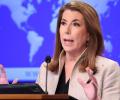
The United States stands strong with India against terrorism and Prime Minister Narendra Modi 'has our full support', the State Department said underlining that Secretary of State Marco Rubio urges India and Pakistan to work towards a responsible resolution that maintains long-term peace and regional stability in South Asia.
The UN Security Council could meet soon to discuss the situation between India and Pakistan, with the UNSC President expressing concern over rising tensions between the nuclear-armed neighbors. The President, Ambassador Evangelos Sekeris of Greece, said a meeting would provide an opportunity to express views and help diffuse tensions. Sekeris also condemned terrorism in all its forms, including the recent attack in Pahalgam, and called for de-escalation and dialogue between India and Pakistan.

'The escalation of tension along the border of Ukraine with the Russian Federation is a matter of deep concern'

Singh also said that Indian troops are standing firm braving extreme weather and hostile forces to defend the country's territorial integrity.

Amid rising tensions between India and Pakistan, the US has called on both countries "not to escalate" the conflict. Secretary of State Marco Rubio is expected to speak with the foreign ministers of Pakistan and India as early as today or tomorrow. The US State Department said Washington is reaching out to both India and Pakistan "regarding the Kashmir situation" and telling them "not to escalate the situation."
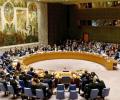
The United Nations Security Council held closed-door consultations on rising tensions between India and Pakistan, with envoys calling for restraint and dialogue. The consultations, requested by Pakistan, lasted for about an hour and a half. UN Secretary-General Antonio Guterres expressed concern over the tensions, urging both countries to avoid a military confrontation. India's former Permanent Representative to the UN, Syed Akbaruddin, said that no consequential outcome could be expected from the discussion.

Assam's longest border dispute is with Nagaland, which began since the creation of the state in 1963.

Pakistan's ambassador to Russia, Muhammad Khalid Jamali, has warned that Pakistan will respond with "full spectrum of force", including nuclear, if it is attacked or its vital water flow is disrupted. The warning comes amid heightened tensions between Pakistan and India following a terrorist attack in Jammu and Kashmir. Jamali also reiterated Pakistan's stance on the Indus Water Treaty, saying any attempt to stop or divert water flow would be considered an act of war. He urged de-escalation, emphasizing the potential danger given both countries possess nuclear weapons. Jamali further called for a neutral investigation into the Kashmir attack, suggesting the involvement of China and Russia. He also highlighted the need to address the root causes of the conflict, pointing to the unresolved Kashmir issue and its potential for resentment.
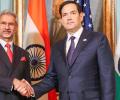
The phone conversation came amid escalating tensions between India and Pakistan over the April 22 terror attack that killed 26 civilians.

India's Foreign Secretary Vikram Misri said on Thursday that the choice of de-escalation is with Pakistan, as India only responded to the April 22 Pahalgam terror attack, which killed 26 people. He added that Pakistan has been escalating the situation with cross-border terrorism against India for decades.
Amid escalating tensions between India and Pakistan, the US has said it will not get involved in the conflict, stressing that it is "fundamentally none of our business." While acknowledging concerns about a potential nuclear war, Vice President J D Vance emphasized that the US cannot control India and Pakistan, but can encourage them to de-escalate. The US has also reiterated its support for direct dialogue between the two countries and encouraged efforts to improve communications.

Trump also repeated his claim that seven fighter jets or more were shot down during the hostilities.

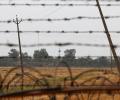
India on Thursday night swiftly foiled Pakistan's attempts to hit various key Indian installations including military stations at Jammu, Pathankot and Udhampur with drones and missiles, the defence ministry said.
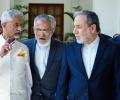
India has no intention to escalate tensions with Pakistan, but any military attacks on its soil will be met with a "very" firm response, External Affairs Minister S Jaishankar said on Thursday. Jaishankar made the remarks at a meeting with Iranian Foreign Minister Abbas Araghchi, emphasizing that the "barbaric" Pahalgam terror attack compelled India to carry out strikes on "cross-border" terror infrastructure on Wednesday. He reiterated that India's response was targeted and measured, but stressed that any further military attacks would be met with a firm response. The Iranian foreign minister, who landed in New Delhi amidst escalating tensions between India and Pakistan, called for de-escalation of the situation and stressed the need for regional cooperation to eradicate terrorism. The meeting also focused on boosting ties in areas of trade and investment, including the Chabahar port project.

World leaders, including the UN Secretary-General and US President Donald Trump, have urged India and Pakistan to exercise restraint and seek peaceful solutions to the ongoing tensions. The calls for calm come after India conducted airstrikes in Pakistan-occupied Kashmir in response to a recent terrorist attack. Leaders from the US, Russia, UK, China, UAE, Qatar, and Japan have expressed concern over the escalating situation and emphasized the need for dialogue and de-escalation.
The United Nations Secretary-General, Antonio Guterres, has called for de-escalation between India and Pakistan, expressing deep concern over rising tensions following a terrorist attack in Jammu and Kashmir. Guterres reiterated his condemnation of the attack and urged both sides to avoid a confrontation, which he described as catastrophic. The Secretary-General has also offered his good offices to support de-escalation efforts. The President of the UN General Assembly, Philemon Yang, has also expressed concern over the escalating violence and called for a resolution through diplomatic means. Meanwhile, Pakistan has denied any involvement in the attack and reiterated its commitment to fighting terrorism.
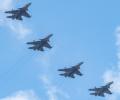
Pakistani military targets at Rafiqui, Murid, Chaklala, Rahim Yar Khan, Sukkur and Chunian were engaged using air-launched precision weapons from Indian fighter jets and the retaliation largely focused on command and control centres, radar sites and weapon storage areas, Qureshi said.

'You cannot 'clear' your way to peace.' 'You need intelligence, calibrated force, impartial law enforcement, political neutrality, humanitarian returns and a sustained reconciliation plan.'
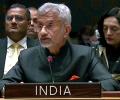
India abstained on two UN General Assembly resolutions calling for a de-escalation, an early cessation of hostilities and a peaceful resolution of the war against Ukraine. The resolutions were adopted on the third anniversary of the Russia-Ukraine conflict, with the UN Secretary General stressing that the war in Ukraine stands as a grave threat to the peace and security of Europe and the core principles of the United Nations.

The post further read that "at a moment of heightened regional turbulence", President Trump "demonstrated great strategic foresight and stellar statesmanship through robust diplomatic engagement with both Islamabad and New Delhi," Dawn reported.
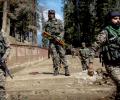
China hopes both sides will remain restrained, move toward each other, and work together to de-escalate the situation.
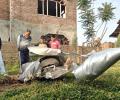
'There is no independently verified imagery or battlefield evidence to support Pakistan's claim.'

Tensions between India and Pakistan are escalating following last week's dastardly terror attack in Pahalgam that claimed 26 lives.
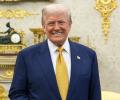
Trump, who has repeatedly said that he stopped the conflict between India and Pakistan through trade, last Friday said for the first time that "five jets were shot down" during the fighting.

Pakistan military spokesperson Lieutenant General Ahmad Sharif Chaudhry told a hurriedly called press conference in Islamabad at around 4 am that th Pakistan air force's Nur Khan (Chaklala, Rawalpindi), Murid (Chakwal) and Rafiqui (Shorkot in Jhang district) airbases were targeted.

UN Secretary-General Antnio Guterres expressed concern over the heightened tensions between India and Pakistan, calling for maximum restraint and urging both countries to step back from the brink. Guterres offered his "good offices" to both governments in the service of peace and condemned the recent terror attack in Pahalgam, emphasizing the need to bring those responsible to justice. He also stressed that a military confrontation would be detrimental and could easily spin out of control. His remarks came hours before a closed consultation of the UN Security Council on the matter, requested by Pakistan. The UN Secretary-General highlighted the need for de-escalation, diplomacy, and a renewed commitment to peace.

'Nine missiles from India had been pointed towards Pakistan, to be launched any time that day'
Pakistan's Ambassador to the US, Rizwan Saeed Sheikh, has urged President Donald Trump to help ease tensions with India, highlighting the Kashmir issue as a "flash point" in nuclear terms. He believes that the US should take a more comprehensive and sustained approach to address the situation rather than just immediate de-escalatory measures.


Main imports from the neighbouring country during April-January 2024-25 included fruits and nuts (USD 0.08 million), certain oil seeds and medicinal plants (USD 0.26 million), and organic chemicals.

The closed-door luncheon meeting came amid escalating tensions between Israel and Iran with Trump exploring Washington's possible involvement.

The Israel-Iran conflict has entered a 'decisive phase' after the United States bombed three major Iranian nuclear sites Sunday morning, feel strategic affairs experts with some of them arguing it was Washington, DC's 'responsibility' to not get involved in the military standoff.

'One good outcome of Operation Sindoor -- perhaps, its best outcome -- could be that India has resumed meaningful contact directly with Pakistan at the military-to-military level,' observes Ambassador M K Bhadrakumar.
